
Key Notes
- Collaborative robots (cobots) are built to work safely alongside people.
- The goal is augmenting human ability, not replacing it.
- Safety, awareness, and intuitive interaction are central design challenges.
- Cobots handle the dull, dirty, and dangerous so people can do more.
- Good collaboration requires robots that understand human intent.
Beyond the Cage
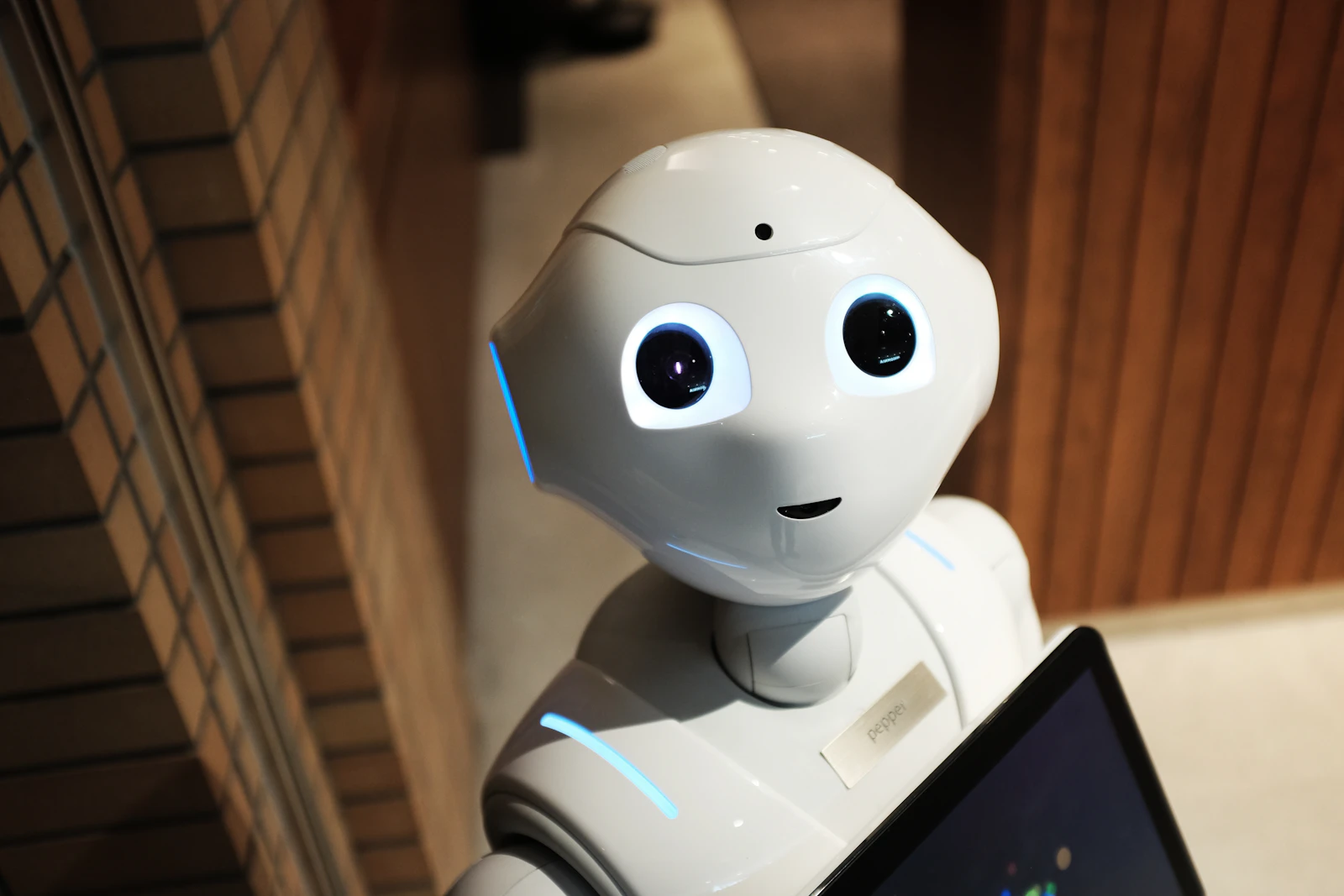
For most of industrial history, robots and people were kept firmly apart. Powerful, fast, and unaware of their surroundings, traditional industrial robots worked inside safety cages, because getting too close was genuinely dangerous. They were tools for repetitive, isolated tasks, not partners. A profound shift is now underway. A new generation of collaborative robots — often called cobots — is designed to leave the cage and work directly alongside people, sharing the same space and even the same tasks. This changes not just what robots do, but our whole relationship with them. At AIRCST, human-robot collaboration is a central theme of robotics research.
What Makes a Robot Collaborative
A collaborative robot is defined less by what it does than by how safely and intuitively it can share space with humans. Several design principles set cobots apart:
Safety first
A cobot must be fundamentally safe to be near. This is achieved through careful design: force and torque sensing that lets the robot detect contact and stop instantly, rounded shapes and lighter construction, and speeds that can be moderated around people. Rather than relying on a cage to keep humans out, the robot itself is built to do no harm. This shift — from external barriers to intrinsic safety — is the technical heart of collaboration.
Awareness
To work with people, a robot must perceive them. Cobots use sensors and vision to understand their environment, detect where humans are, and respond appropriately — slowing as a person approaches, pausing when someone enters a shared zone, and resuming smoothly. This situational awareness is what makes sharing space possible.
Intuitive interaction
Collaboration requires easy communication in both directions. Many cobots can be programmed by physically guiding them through a task — a worker moves the robot's arm, and it learns the motion. This makes robots accessible to people without specialized programming skills, and it reflects a broader goal: robots that ordinary people can work with naturally.
Augmentation, Not Replacement
The guiding philosophy of collaborative robotics is partnership. The aim is not to remove humans but to combine the complementary strengths of people and machines. Robots excel at precision, tireless repetition, strength, and consistency. Humans excel at judgment, dexterity, adaptability, and dealing with the unexpected. A well-designed collaboration lets each do what it does best. The robot handles the dull, dirty, and dangerous; the human provides the skill, flexibility, and oversight.
In a factory, a cobot might lift heavy parts and hold them steady while a skilled worker performs delicate assembly. In a lab, a robot might handle repetitive sample preparation while a scientist focuses on interpretation. The result is often more than either could achieve alone — and it can make work safer and less physically punishing for people.
A Concrete Example
Picture a small workshop where a single worker must assemble products involving heavy lifting and precise, repetitive fastening. Alone, the work is slow and causes strain and injury over time. With a collaborative robot, the cobot lifts and positions the heavy components and performs the repetitive fastening, while the worker handles the parts requiring judgment and dexterity and oversees quality. Productivity rises, injuries fall, and the worker's role becomes more skilled and less punishing. Neither replaced the other; together they did better work.
The Design Challenge
Building robots that collaborate well is genuinely hard. The robot must be safe under all conditions, perceive and predict human behavior, and interact in ways that feel natural and trustworthy. Understanding human intent — anticipating what a person is about to do — is an especially deep challenge, blending robotics with insights from psychology and human factors. Getting this right is what separates a robot that is merely safe from one that is genuinely a good partner.
Why This Matters
As robots move into factories, warehouses, hospitals, farms, and eventually homes, the ability to work safely and effectively alongside people becomes essential. The future of automation is not armies of isolated machines replacing humans, but collaborative systems that amplify human capability. Designing that future thoughtfully — so technology serves and empowers people — is one of robotics' most important tasks.
Looking Ahead
Collaborative robots will grow more capable, more aware, and easier to work with. The frontier is robots that understand our intentions and adapt to us as fluidly as a good human colleague would — making the partnership between people and machines ever more productive and humane.
Design the Partnership — Research Robotics at AIRCST
At the Aleta International Research Center for Science and Technology (AIRCST), our robotics researchers build machines designed to work safely alongside people. If you want to shape the future of human-robot collaboration, explore our research programs and join us, or get in touch to learn more.